Press Brake Bending
Custom and precision bending
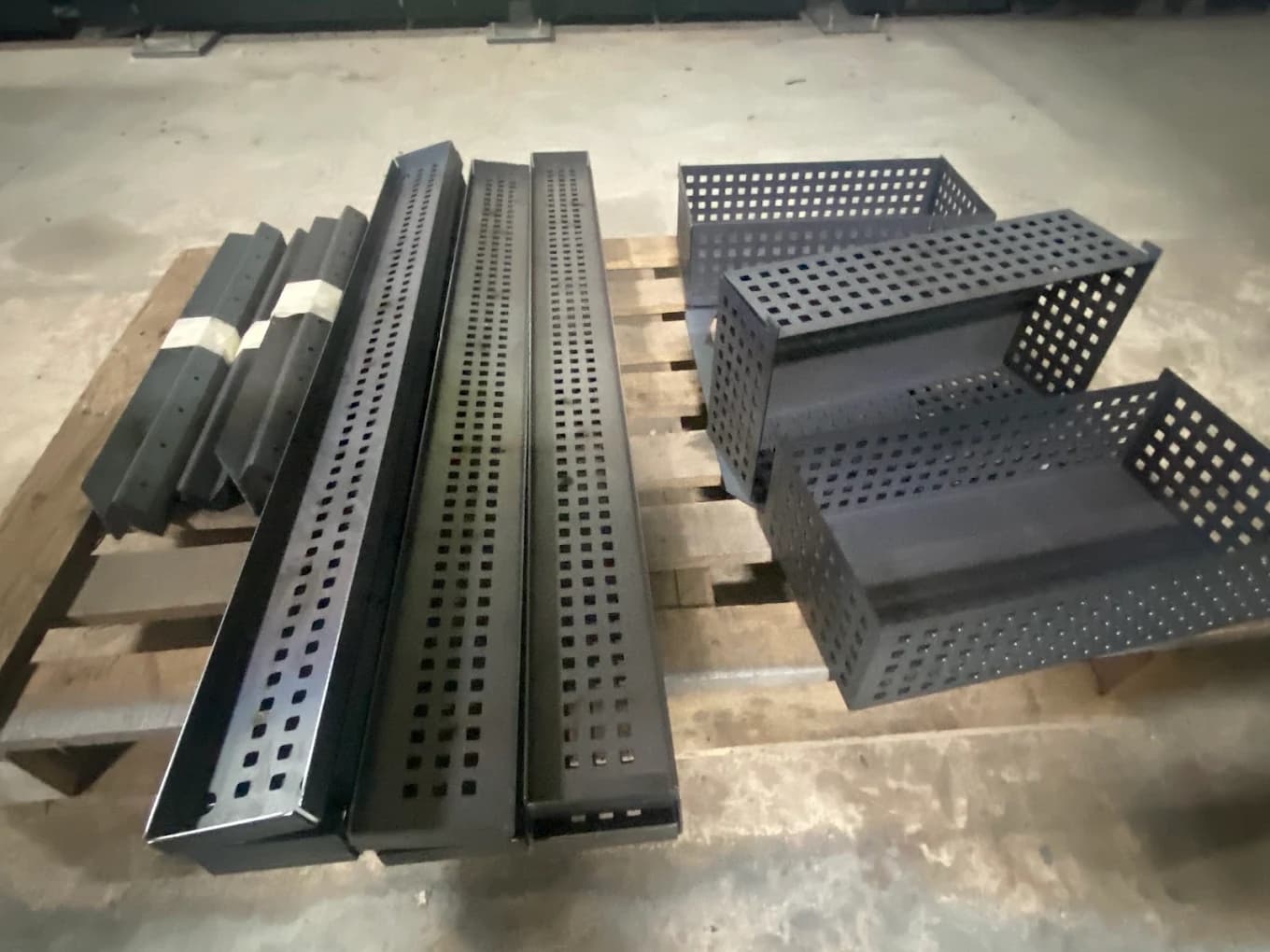
Press brake bending forms sheet material in a controlled way between an upper punch and a lower die. It produces profiles, channels, boxes and enclosure forms from a single piece, without welding or joints.
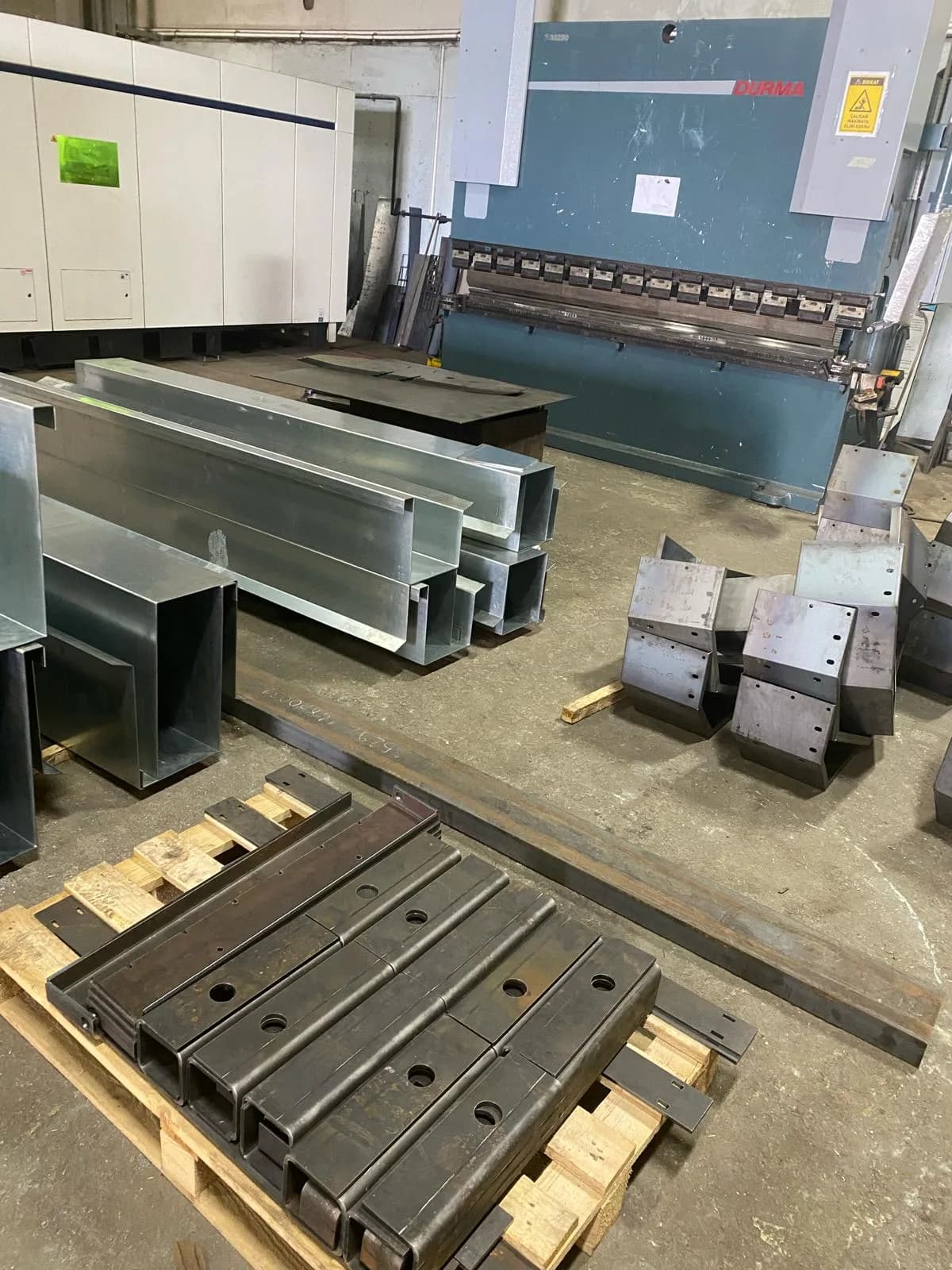
At Beta Metal we bend mild steel, stainless steel and aluminium on a press brake with a 3000 mm bending length working up to 10 mm thick. Alongside standard V dies, job-specific tooling allows production at different angles and section profiles.
Running cutting and bending in the same facility means the flat pattern, the cutting allowance and the bend sequence are all planned together. The cutting size is derived from the finished part dimensions, and dimensional checks are applied before and after bending.
Press Brake Bending
Advantages of press brake bending
Controlled forming, with tooling choice, flat pattern and bend sequence planned together.
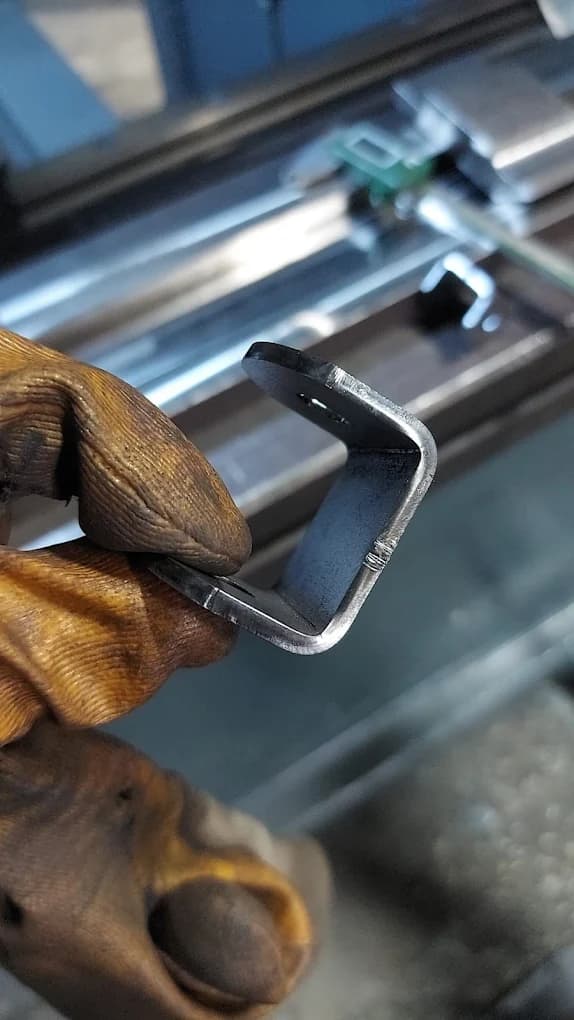
Precise bend angles
Bend angles and section dimensions are produced to the technical drawing with high repeatability.
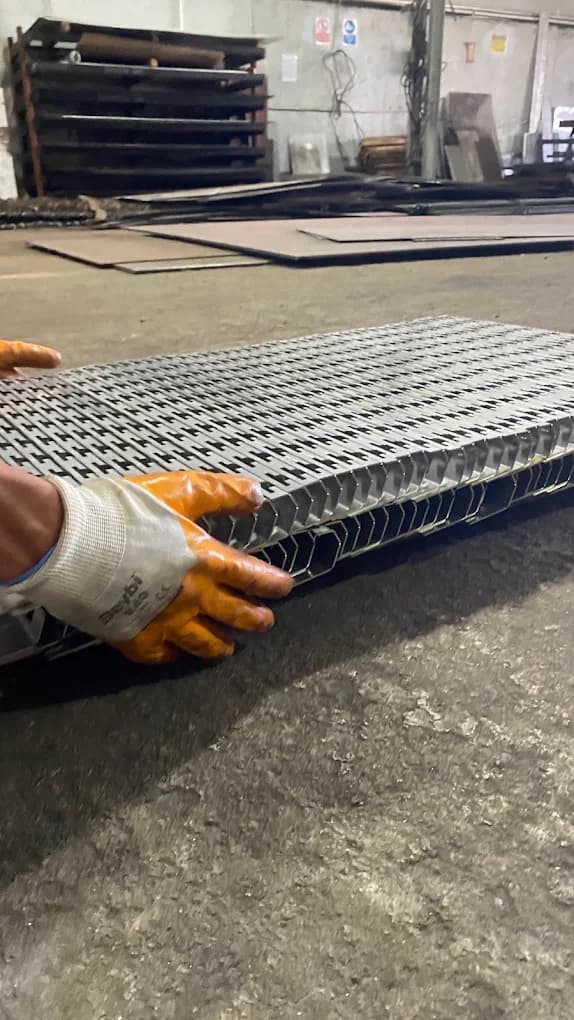
Different gauges and materials
Mild steel, stainless steel and aluminium can be bent from 0.5 mm up to 10 mm.
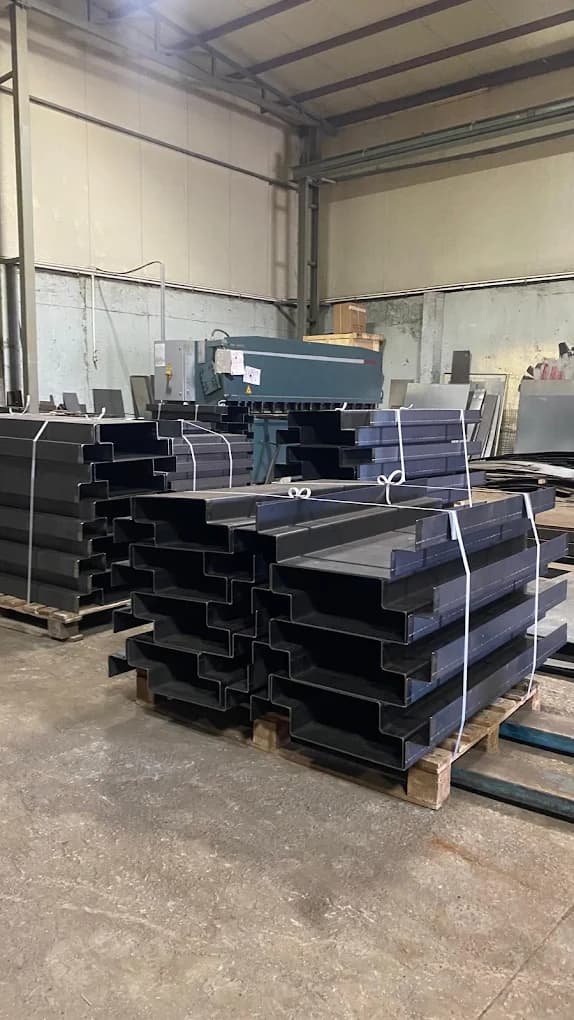
Production with custom tooling
Alongside standard V dies, job-specific tooling allows bending at different sections and angles.
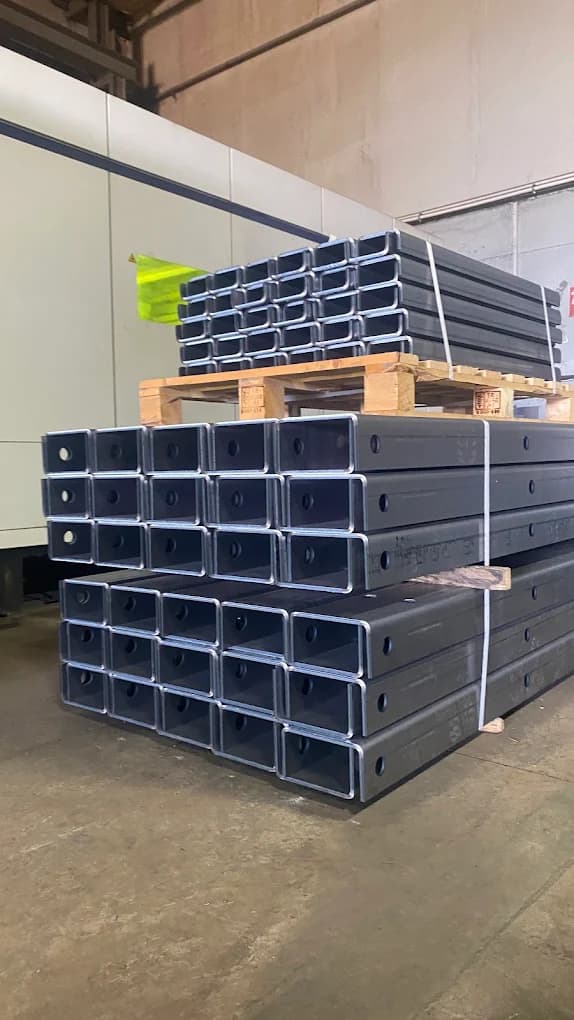
Suited to series production
From a single sample part to high-volume series work, bends are repeated to the same dimensions.
Technical specifications
The press brake works to a 3000 mm bending length and up to 10 mm thick. Thickness ranges of 0.5 – 10 mm in mild steel, 0.5 – 8 mm in stainless steel and 0.5 – 10 mm in aluminium can be processed.
Bending uses standard V dies together with job-specific tooling. On channels, box sections and parts with many bends, the bend sequence is planned in advance to help avoid tool collisions and dimensional drift.
Flat pattern calculation is carried out by Beta Metal; the cutting size is derived from the finished part dimensions. Dimensional checks before and after bending are applied, and first-article approval is obtained on series production.